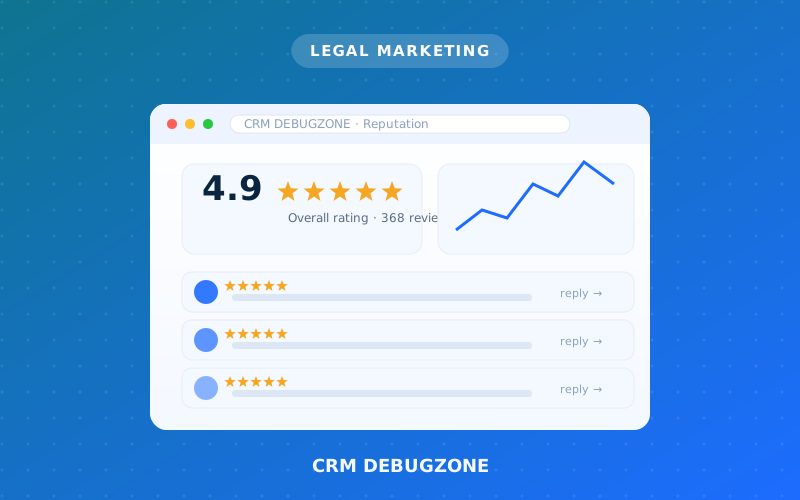
When a potential client considers your firm, they don't just visit your website — they Google your name, read your reviews, and form an opinion before they ever call. Surveys show 82% of people who find an attorney online use reviews to decide, and nearly 40% call them their primary source. Your online reputation isn't a vanity metric; it's often the deciding factor.
What "reputation" actually means online
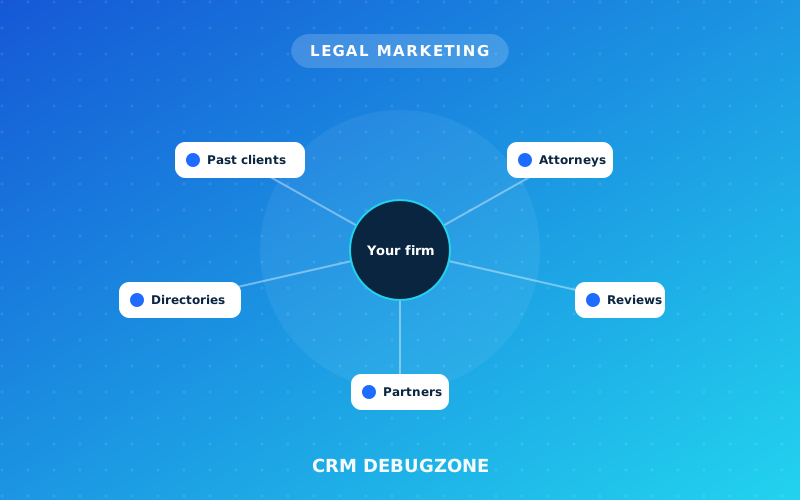
It's the full picture a prospect sees: your Google star rating and reviews, your Google Business Profile, mentions on directories like Avvo and Yelp, your website, and increasingly what AI assistants say when someone asks them to recommend a lawyer. Managing it means shaping all of these deliberately instead of leaving them to chance.
The pillars of reputation management
- Monitor: know what's being said about your firm across every platform, in real time.
- Generate: build a steady flow of genuine, recent reviews from happy clients.
- Respond: reply to every review — professionally and promptly, especially the critical ones.
- Protect: address negative content and keep your profiles accurate and consistent.
Why recency and rating both matter
A five-year-old five-star rating does little. Prospects trust recent reviews that describe situations like their own, and most simply skip firms rated under four stars. A reputation program keeps your reviews fresh, your rating strong, and your responses visible.
Reputation feeds everything else
Strong reviews don't just win the client comparing firms — they lift your local SEO, improve ad performance, and even influence how AI tools describe you. It's one of the highest-leverage investments a firm can make. We help firms put reputation management on autopilot, connected to their intake and case workflows so it runs without adding to anyone's plate.
A great reputation is built on purpose, not by accident. Let's build yours.
Want this for your firm?
Get a free, transparent estimate in minutes — or talk to a specialist.